
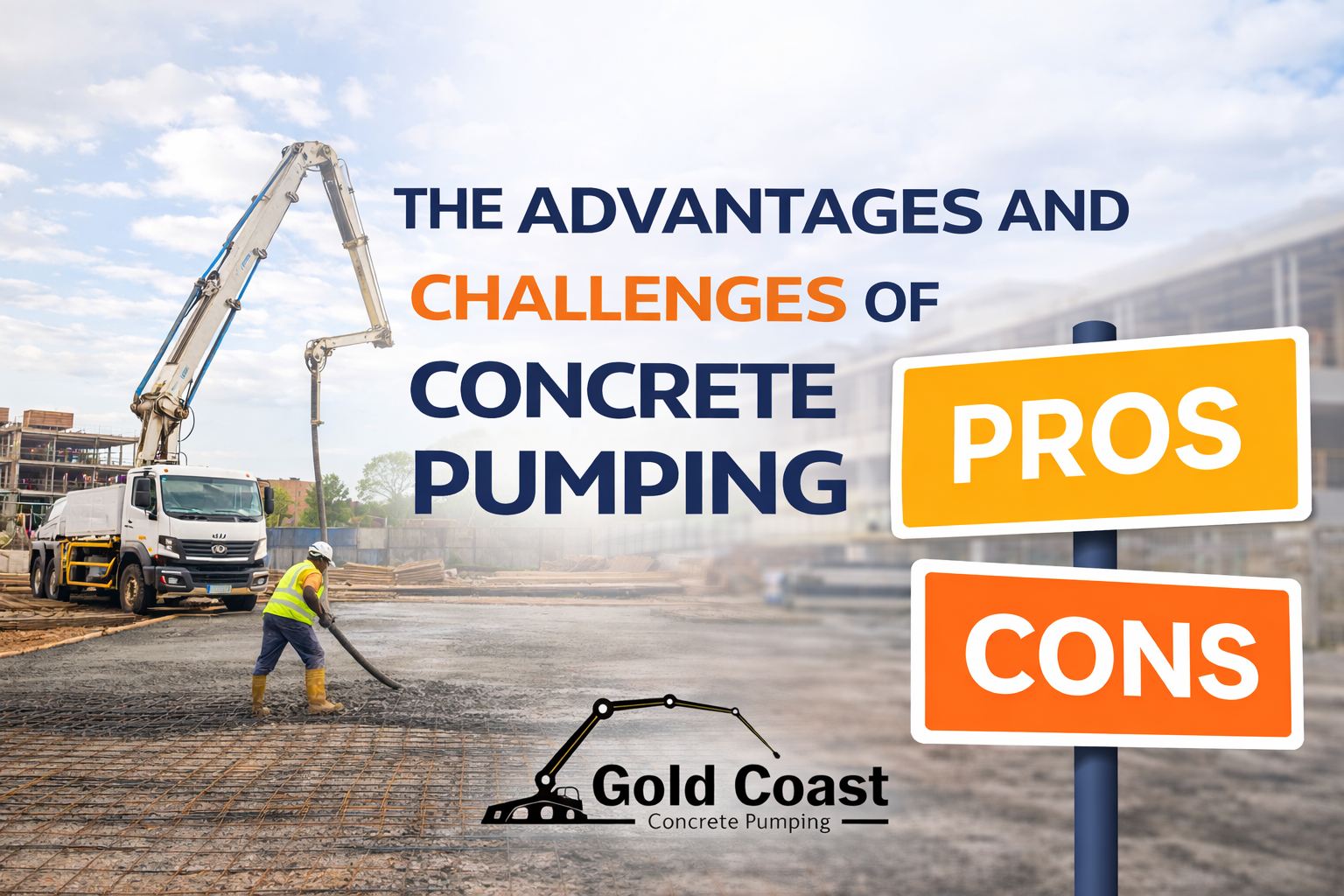
Concrete pumping has become an essential method in modern construction and home improvement projects. Whether it’s a residential driveway, commercial slab, or complex foundation, this technique offers a more efficient way to transport and place concrete. However, like any construction method, concrete pumping comes with both benefits and challenges. Understanding these can help homeowners, builders, and contractors make informed decisions for their projects.
What Is Concrete Pumping?
Concrete pumping is the process of transferring freshly mixed concrete from a truck to the desired location using a pump and pipeline system. Instead of relying on manual labour or traditional methods like wheelbarrows, concrete is delivered quickly and accurately through hoses or booms. This makes it especially useful for projects with limited access or large-scale requirements.
Advantages of Concrete Pumping
1. Increased Efficiency and Speed
One of the biggest advantages of concrete pumping is the speed it brings to a project. Traditional concrete placement can be time-consuming and labour-intensive, especially for large areas. With a pumping system, concrete is delivered continuously and directly to the required spot, significantly reducing pouring time.
This efficiency allows projects to be completed faster, helping homeowners and contractors stay on schedule and avoid costly delays.
2. Access to Difficult Areas
Many construction sites, especially residential properties, have limited access due to narrow pathways, fences, or landscaping. Transporting concrete manually in such conditions can be extremely challenging.
Concrete pumps can easily reach hard-to-access areas using long hoses or booms. Whether it’s a backyard, elevated structure, or confined space, the pump ensures that concrete is placed exactly where it’s needed without disruption.
3. Reduced Labour Costs
Manual concrete handling requires a large workforce to carry and spread the material. This not only increases labour costs but also slows down the project.
Concrete pumping reduces the need for excessive manpower. With fewer workers required on-site, overall labour expenses decrease while productivity increases. This makes it a cost-effective solution for many construction projects.
4. Improved Precision and Quality
Accuracy is crucial when working with concrete, as uneven distribution can lead to structural issues or poor finishes. Concrete pumping allows for controlled placement, ensuring even coverage and a smoother surface.
This level of precision improves the overall quality of the project, reducing the need for rework and ensuring long-lasting results.
5. Cleaner Worksite
Traditional concrete pouring methods often result in spills, splashes, and wasted material. Cleaning up after the job can take significant time and effort.
Concrete pumping minimises mess by delivering the material directly to the desired location. This keeps the worksite cleaner, safer, and more organised, which is especially important for residential projects.
6. Versatility in Applications
Concrete pumping is suitable for a wide range of applications, including:
- Driveways and pathways
- Foundations and slabs
- Patios and outdoor areas
- Retaining walls
- Commercial construction projects
Its flexibility makes it a preferred choice for both small and large-scale jobs.
Challenges of Concrete Pumping
1. Initial Setup Costs
One of the primary challenges of concrete pumping is the initial cost of hiring equipment and skilled operators. Compared to traditional methods, pumping may seem more expensive upfront.
However, when considering reduced labour costs, faster completion times, and improved efficiency, the overall investment often proves worthwhile.
2. Equipment Maintenance and Reliability
Concrete pumps are complex machines that require regular maintenance to function effectively. Any breakdown or malfunction can cause delays and disrupt the project timeline.
This is why it’s important to work with experienced professionals who use well-maintained equipment to ensure smooth operation.
3. Skilled Operation Required
Operating a concrete pump requires training and expertise. Improper handling can lead to uneven placement, blockages, or safety hazards.
Hiring qualified operators is essential to ensure that the pumping process is carried out safely and efficiently.
4. Potential for Blockages
Concrete pumping systems can sometimes experience blockages, especially if the mix is not prepared correctly or if there are issues with the pipeline.
Proper planning, correct concrete mix design, and experienced handling can minimise this risk and keep the project running smoothly.
5. Site Preparation Requirements
For concrete pumping to be effective, the site must be properly prepared. This includes ensuring access for the pump truck, setting up pipelines, and creating a safe working environment.
In some cases, additional planning may be required to accommodate the equipment, particularly in tight or complex spaces.
Balancing the Pros and Cons
While concrete pumping does present some challenges, its advantages far outweigh the drawbacks for most projects. The key is to plan carefully, use the right equipment, and work with experienced professionals who understand the process.
By doing so, homeowners and contractors can maximise efficiency, reduce costs, and achieve high-quality results.
Conclusion
Concrete pumping has transformed the way construction and home improvement projects are carried out. Its ability to deliver concrete quickly, accurately, and efficiently makes it an invaluable solution for modern building needs. Although there are challenges such as setup costs and the need for skilled operation, these can be effectively managed with proper planning and expertise.
For reliable and professional service, Gold Coast Concrete Pumping offers the experience, equipment, and commitment needed to ensure your project is completed smoothly, safely, and to the highest standard.