Concrete pumping plays an important role in modern construction by helping deliver concrete quickly and efficiently to different areas of a job site. Two of the most common types of pumping equipment used in construction are line pumps and boom pumps. Each type of pump is designed for specific project requirements, and choosing the right one can improve productivity, reduce labour, and ensure accurate concrete placement.
Understanding the differences between line pumps and boom pumps can help builders, contractors, and property owners select the most suitable option for their construction projects.
What Is a Line Pump?
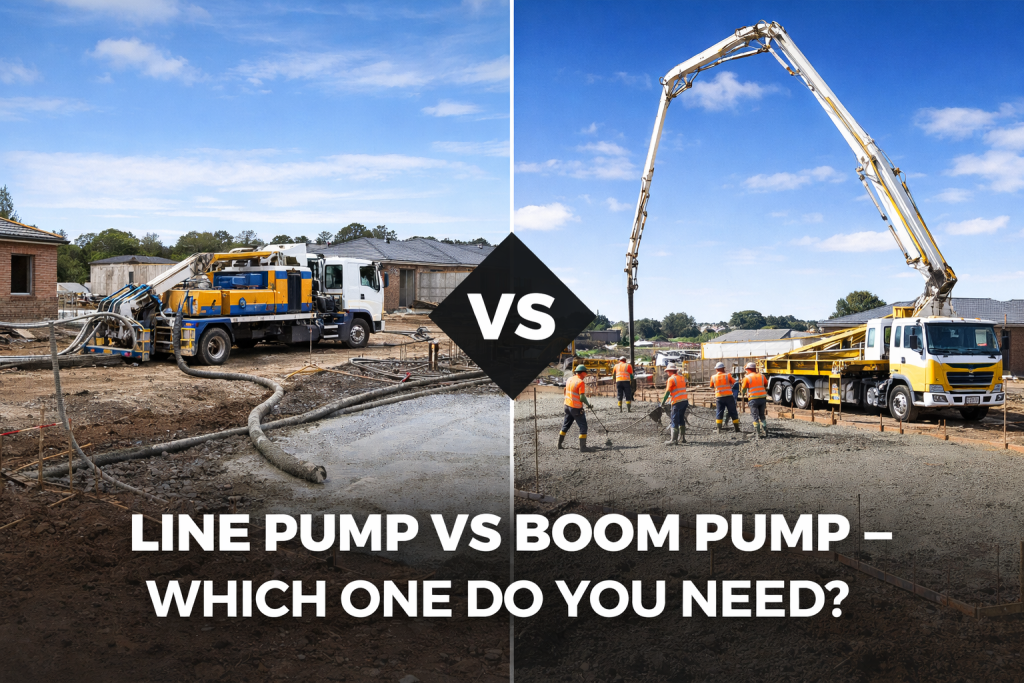
A line pump is a type of concrete pump that transports concrete through flexible hoses or pipelines. These hoses can be extended across the ground and directed to the specific area where the concrete needs to be poured.
Line pumps are commonly used for smaller to medium-sized projects where flexibility and accessibility are important. Because the hoses can be easily moved and positioned, line pumps work well in areas where space is limited or where equipment cannot easily reach.
Common Uses of Line Pumps
Line pumps are ideal for projects such as:
- Residential house slabs
- Concrete driveways
- Footings and foundations
- Pathways and patios
- Swimming pools
- Small commercial construction projects
These pumps provide a practical and cost-effective solution for projects that require precise concrete placement in tighter spaces.
What Is a Boom Pump?
A boom pump is a larger concrete pumping machine that uses a hydraulic arm, also known as a boom, to deliver concrete. The boom extends high above the construction site and allows operators to place concrete over long distances and at elevated locations.
Boom pumps are typically mounted on large trucks and are used for major construction projects where concrete needs to be delivered quickly across large areas or tall structures.
Common Uses of Boom Pumps
Boom pumps are often used for:
- Large commercial buildings
- Multi-storey construction projects
- High-rise structures
- Large concrete slabs
- Industrial construction sites
Because of their reach and pumping capacity, boom pumps are ideal for large-scale construction projects where efficiency and speed are essential.
Key Differences Between Line Pumps and Boom Pumps
Although both pumps perform the same basic function of delivering concrete, they differ in several important ways.
Size and Equipment
Line pumps are generally smaller and use flexible hoses to transport concrete across the job site. Boom pumps are larger machines equipped with a long hydraulic arm that can reach high or distant areas.
Project Size
Line pumps are best suited for small to medium residential projects, while boom pumps are typically used for large commercial or industrial construction work.
Accessibility
Line pumps are more flexible and can easily navigate tight spaces, narrow access points, or areas where large equipment cannot be positioned. Boom pumps, on the other hand, require more space for setup but provide greater reach once positioned.
Speed and Volume
Boom pumps can deliver a larger volume of concrete more quickly, making them ideal for large construction sites. Line pumps are slower but provide better control and flexibility for smaller jobs.
Which Pump Should You Choose?
Choosing between a line pump and a boom pump depends on the size, location, and complexity of your project.
A line pump is usually the best choice if:
- The project is residential or small-scale
- Access to the site is limited
- Concrete needs to be delivered through narrow spaces
- The pouring area is close to ground level
A boom pump may be more suitable if:
- The project is large or multi-storey
- Concrete needs to be delivered at height
- Large volumes of concrete must be poured quickly
- The job site has enough space for large equipment
Consulting with experienced concrete pumping professionals can help determine the best option for your specific construction needs.
Benefits of Using Professional Concrete Pumping Services
Regardless of whether a line pump or boom pump is used, professional concrete pumping services offer several advantages for construction projects. Pumping equipment helps speed up the pouring process, reduce manual labour, and improve accuracy when placing concrete.
Using professional services also improves safety on construction sites by minimizing heavy lifting and reducing the risk of accidents. In addition, modern pumping equipment helps maintain consistent concrete flow, ensuring a smooth and even finish.
Conclusion
Both line pumps and boom pumps play an important role in modern construction, and choosing the right equipment can greatly improve the efficiency and success of your project. Line pumps are ideal for smaller residential work and tight access areas, while boom pumps are better suited for large commercial and high-rise construction projects that require greater reach and capacity.
If you are planning a construction project and need reliable concrete pumping support, Gold Coast Concrete Pumping is ready to help. Our experienced team provides professional pumping solutions tailored to different project requirements, ensuring efficient and accurate concrete placement every time.